
40,000 HIVES PRODUCING
We have a homogenizing and fractionating plant for honey, built to meet the marketing needs of small producers in the center of the country. With modern technology and a fractionation capacity of 1,000 tons years, in different presentations, approved by SENASA for export.
All BPM standards – Good Manufacturing Practices are applied, all Sanitization Standard Operating Procedures (SOPs) steps are performed, and HACCP certified standards, risk analysis, and critical points control. That allows us to have a product quality-assured, standardized Sanitization (SOPs) and is HACCP certified from the standards.
The analysis of risks and control of critical points allows us to have an assured product quality.
The origin of the kinds of honey is found in broad meadows of our area of livestock influence, where the floral source is high in alfalfa, clovers, melilotus, and wild mountains.
Our related beekeepers work on a traceability system, where 40,000 hives are within an effective program—handled with the same technology and strict internal controls that do not require the application of antibiotics and pesticides.
THE PRODUCTS WE OFFER TO THE MARKET ARE

BULK AND HOMOGENIZED HONEY


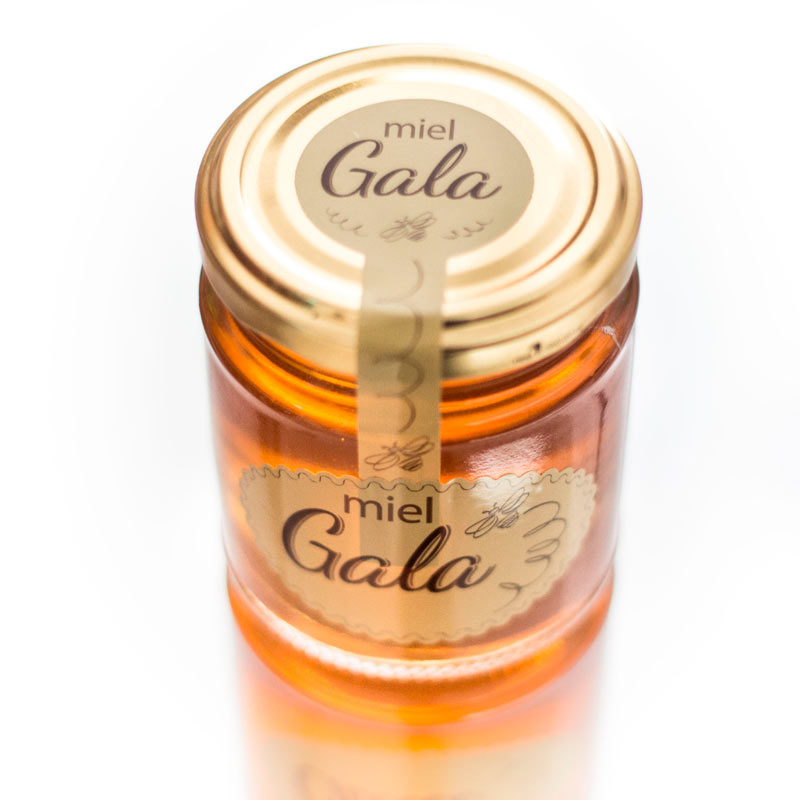


PRESERVATION AND USE RECOMMENDATIONS
Although it is a long-lasting product, its organoleptic characteristics can change over time, such as good wines. Most crystallize at some point; the color darkens, and the perfume of the flowers is lost and can increase its acidity. That is why it is recommended to keep it in a closed container, protecting it from moisture, light, and heat. In addition, in order not to alter its properties, we must extract honey from the honeycomb by pressing or centrifugation.
On the other hand, pressure extraction – usually done in hot water – makes it possible to obtain a more significant quantity, but the antiseptic and antibiotic substances are destroyed. In some cases, when industrially processed, it is heated to around 75ºC to make it more fluid and not crystallize. Both procedures nullify their properties, and it is for the same reason that when it is suggested to heat it in a water bath if it has crystallized, it is recommended to always do so below 40ºC.


NOT SUITABLE FOR BABIES
Honey is very dangerous for babies under one year, even in tiny amounts like a teaspoon. Both cane and bee honey can contain spores of clostridium botulinum, which produce neurotoxins in the infant’s immature intestine. Botulism, which is recognized by symptoms of listlessness, lack of appetite, constipation, weak crying, and muscle weakness, can cause paralysis in the arms, legs, and respiratory muscles if not treated in time.
- It is easy to assimilate because it has short-chain carbohydrates.
- It facilitates the digestion and assimilation of other foods.
- It has more sweetening power than sugar.
- It improves food preservation.
- It is a gentle laxative (regulates intestinal function).